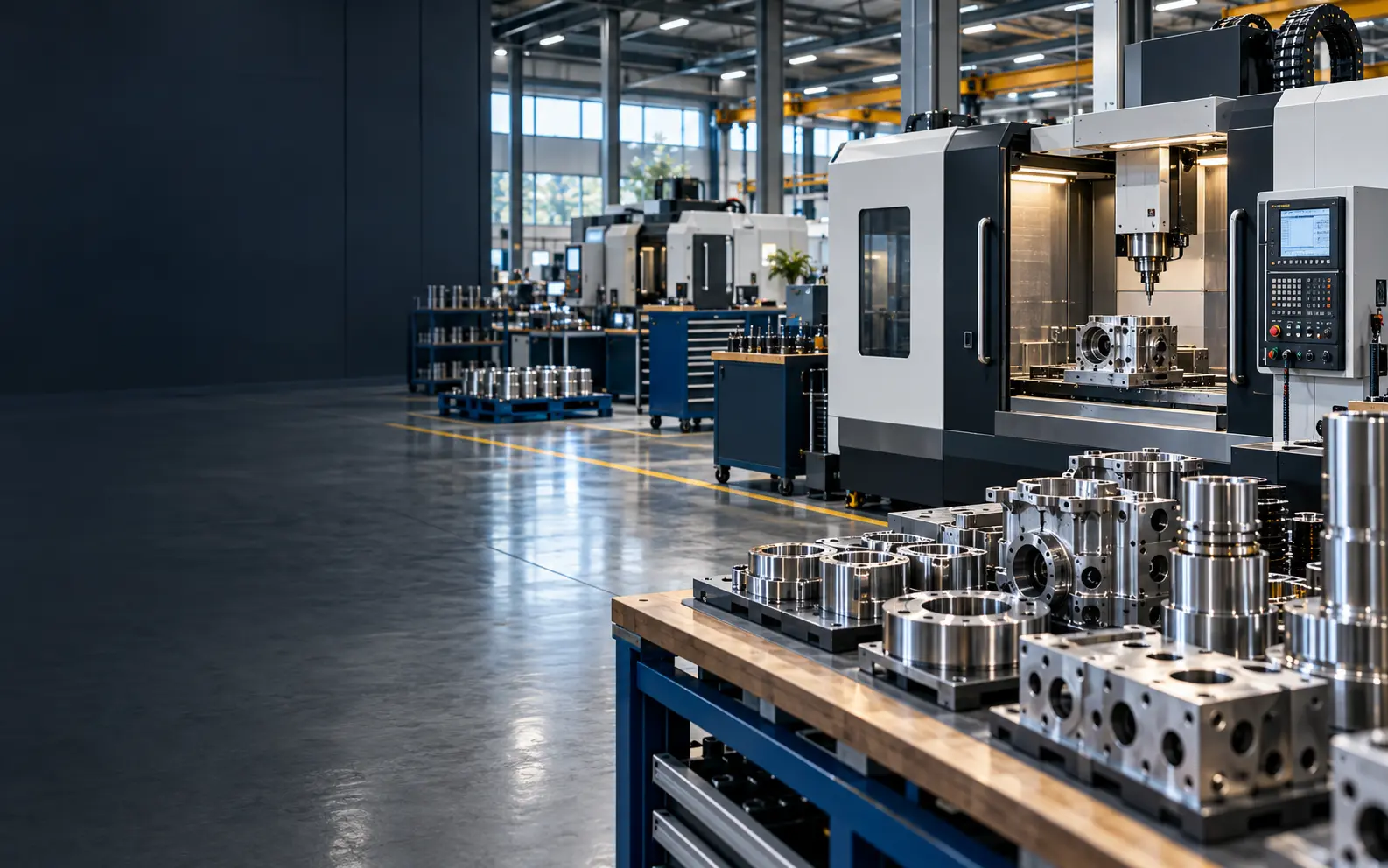
Critical Equipment
CNC machines, mills, lathes, controls, compressors and electrical systems can be costly to repair—and far slower to replace.
Machining & CNC Insurance
Specialized insurance, safety and claims strategies for machine shops, CNC operations and precision component manufacturers.
Built Around the Shop Floor
Machining operations rely on specialized equipment, skilled employees, exact specifications and dependable delivery schedules. Damage to one critical machine can interrupt multiple customer commitments at once.
The insurance strategy should account for more than the building and finished inventory. Customer-owned materials, molds, dies and tooling; imported replacement parts; contractual obligations; connected machinery; and the time required to restore production all affect the real cost of a loss.
Machining Risk Profile
CNC machines, mills, lathes, controls, compressors and electrical systems can be costly to repair—and far slower to replace.
Materials, molds, dies, fixtures and tooling in the shop’s care may require specific limits, valuation methods and coverage treatment.
A component can fail to meet tolerances without causing bodily injury or physical damage, creating a financial-loss exposure outside traditional product liability.
Repair time is only part of the loss. Delayed orders, expedited work, lost customers and specialized replacement lead times can become the larger expense.
Machine guarding, lifting, repetitive motion, metalworking fluids, slips and material handling all influence workers’ compensation performance.
Networked machinery and production systems create cyber exposures involving ransomware, system interruption and compromised process controls.
Insurance for Machine Shops
Protect buildings, machinery, inventory and other physical assets while addressing sudden mechanical, electrical and pressure-system failures.
Evaluate realistic restoration periods, replacement lead times, continuing expenses and the cost of temporary or outsourced production.
Identify customer-owned materials, dies, molds, fixtures and tooling at the facility, in transit or temporarily away from the premises.
Address third-party injury, property damage, completed operations and allegations arising from manufactured components or finished products.
Protect against certain financial-loss allegations when a part does not meet specifications or perform as intended without causing traditional bodily injury or property damage.
Connect coverage with safety, active claim oversight, return-to-work planning and experience modification management.
Prepare for ransomware, funds-transfer fraud, data exposure and production interruption involving connected equipment and systems.
Protect business-owned vehicles, employee driving and customer materials or finished products moving between facilities and job sites.
Workers’ Compensation Result
A machining client’s experience modification factor had climbed to 2.53 following adverse claim activity. Champion helped implement focused safety measures, stronger accountability and active oversight of open claims while supporting a safe work environment.
Explore Safety & Claims SupportSafety and Claims Advocacy
Workers’ compensation costs reflect more than claim frequency. Reporting practices, reserves, return-to-work opportunities, claim development and experience-rating data can all influence the outcome.
Chris works closely with Susan Wade, Champion’s Director of Workers’ Compensation Claims, to help machining clients review significant claims, coordinate with carriers and adjusters, identify barriers to resolution and monitor the trends affecting long-term performance.
Meet the Manufacturing teamFrequently Overlooked
Machine shops routinely hold materials, molds, dies, fixtures and tooling owned by customers. The property may be irreplaceable, difficult to value or essential to a customer’s own production schedule.
Alternative Risk for Machining Operations
Machine shops with disciplined safety practices, active claims management, financial strength and favorable loss history may be candidates for a captive or another loss-sensitive structure.
Explore Alternative RiskCommon Questions
Coverage needs vary, but commonly include commercial property, equipment breakdown, business income, general and product liability, manufacturers E&O, workers’ compensation, cyber liability, commercial auto and protection for customer-owned property.
Not necessarily. Coverage depends on policy language, valuation, limits and how the property is classified. Customer-owned materials, molds, dies and tooling should be identified and reviewed specifically.
Improved safety practices, active claim oversight, return-to-work planning and accurate experience-rating information can strengthen loss performance and may improve a manufacturer’s insurance position over time.
Review the Whole Operation
Evaluate equipment, customer property, claims, contracts and alternative-risk opportunities through one coordinated review.